Šljivovica and Mitrovo Polje Camps
“Then the policeman struck me in the chest with ‘scissors’, and I immediately fell down. Then he told me, ‘Now you will remember Milan Lukić’s patron saint day,’ and jumped on my back so hard that I thought he had split me in two.”
Statement of witness O. Z. given to the HLC, July 2007
Following the outbreak of the conflict in Bosnia and Herzegovina (BiH), the towns of Srebrenica and Žepa in the central part of the River Drina Valley (Podrinje) gained strategic importance for the Bosnian Serbs, as they connected Bosanska Krajina with the parts of Herzegovina more to the south where Bosnian Serbs lived. As of the year 1992, the leadership of Bosnian Serbs issued a number of directives and other documents envisaging
1)
, as well as the expulsion of Bosniaks from that area. In November 1992, the Commander of the General Staff of the Army of Republika Srpska (VRS) issued Directive no. 4 assigning the Drina Corps the task to do their utmost to banish the Bosniak population from central Podrinje.
Establishment of safe areas
The United Nations Security Council in May 1993 adopted Resolution 824, whereby Srebrenica and Žepa were declared safe areas. In reality, this meant that all hostilities in the enclaves must cease.
Despite the prohibition of the use of firearms in the enclaves, in early May 1995 the President of Republika Srpska, Radovan Karadžić issued Directive no. 7 charging the Drina Corps of the (VRS) to separate Srebrenica and Žepa in order to prevent communication between the enclaves.
“Capitulation of Žepa”
After the capture of Srebrenica, in mid-July 1995 the VRS launched an attack towards the Žepa enclave. In parallel with the attack, General Ratko Mladić conducted negotiations with the Bosniak representatives about the way to carry out the evacuation of civilians, the wounded and infirm from the enclave towards the territory controlled by the BiH Army. Notwithstanding these negotiations, on 13 July 1995, the commander of the Drina Corps, Radislav Krstić issued an order to “liquidate the enclave”.
Selection of documents
Seeking Salvation in Serbia – Crossing the Drina
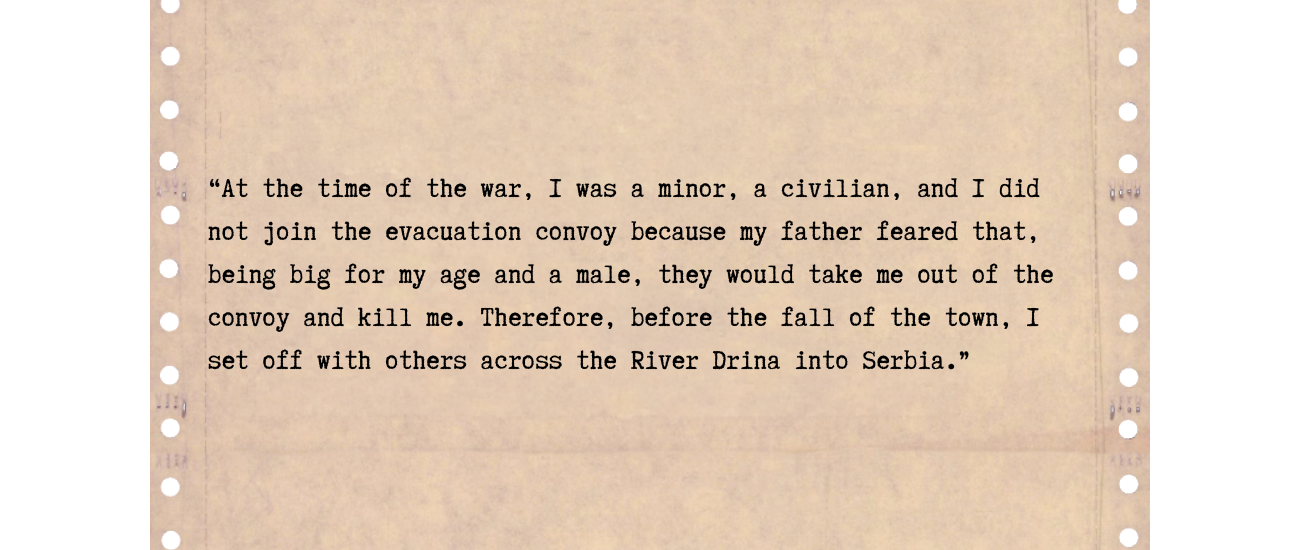
Statement of witness S. J. given to the HLC, July 2007
After the “capitulation” of Žepa, men fit for military service sought refuge on Mount Žepa. They had three options to survive. The first option was to make their way through the woods and somehow manage to reach the territory controlled by the BiH Army; the second was to remain on the mountain and try to resist the VRS; and the third was to cross the Drina on rafts and find salvation in Serbia.
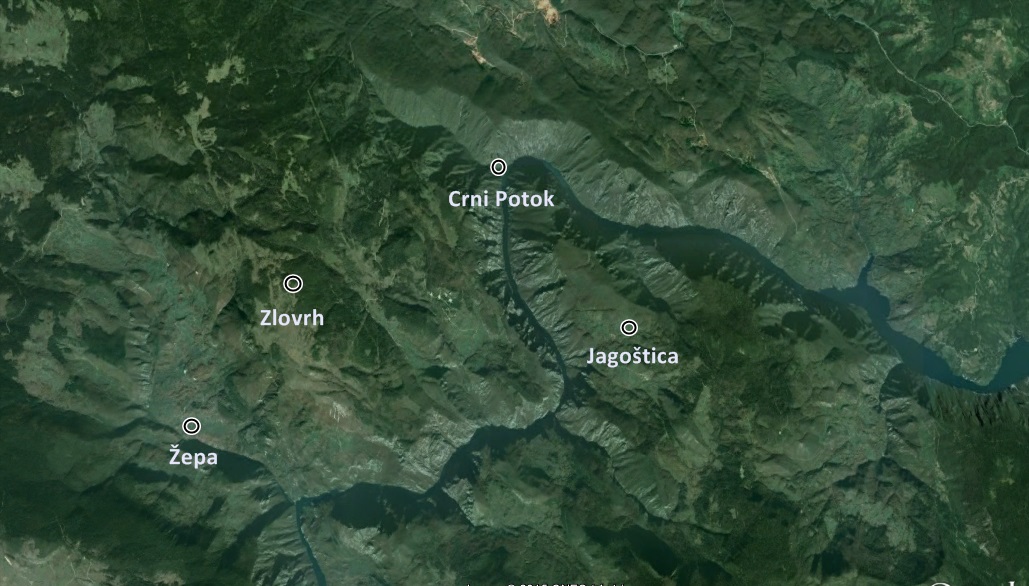
Sketch of the crossing over the River Drina
The majority favoured the third option. And so in late July 1995, Bosniaks from Žepa started to build makeshift rafts to cross to the right bank of the Drina in the area of Crni Potok and then climb Mount Zvijezda, hoping to find salvation in Serbia.
From late July to mid-August about 800 Bosniaks crossed over to the territory of Serbia.
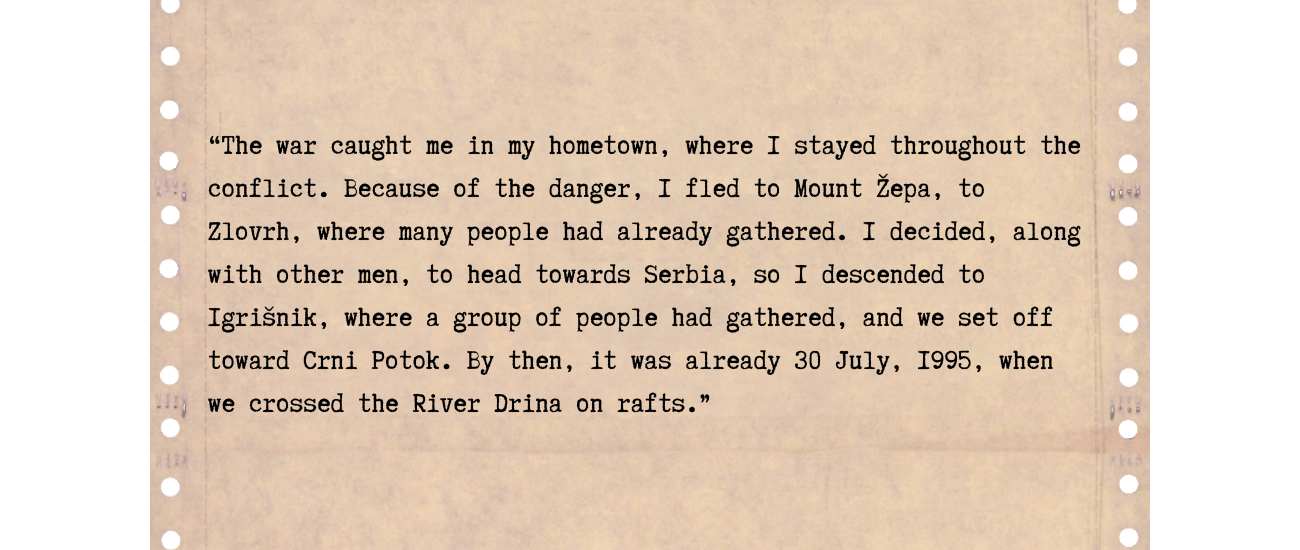
Statement of witness R. O. given to the HLC, November 2007
Statement of witness S. S. given to the HLC, November 2007
Statement of witness R. B. given to the HLC, November 2007
Once across the Drina, depending on the specific point of crossing, the men were met by members of the military police of the Yugoslav Army (VJ) 15th Border Battalion and 16th Border Battalion, headed at that time by Ljubiša Diković. The command of the 16th Battalion formed a three-man to take down their names and then turn them over to the Reception Commission formed by the Ministry of the Interior (MUP).
Although the HLC has requested information about the commander of the 15th Border Battalion from the Serbian Ministry of Defence, the relevant facts have to date remained .
The VJ border guards first registered the men who defected to Serbia and then seized all their personal belongings, including hand watches, money and other valuables. Since this confiscation was accompanied by shouts, butt-stroking and kicking, an underage boy, Mujo Hodžić, fearing that he would be killed, bolted. The border guards opened fire and killed him on the spot.
Arrival in Jagoštica
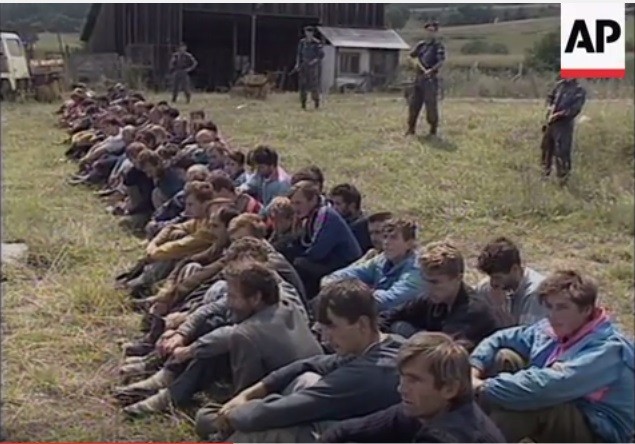
VJ soldiers took a group of men to the village of Jagoštica near Bajina Bašta, where the 16th Border Battalion had an outpost. On the way to Jagoštica, members of the Serbian forces abused, humiliated and beat the Bosniaks. In the building of the elementary school in Jagoštica policemen from Bajina Bašta photographed and registered them, and interrogated them about their respective roles in the BiH Army. Interrogations were accompanied by blows, trampling, insults and curses. Some prisoners had cigarettes stubbed out on their bodies and were kept awake all night with strict instructions not to fall asleep. Sometime later, two TAM-110 trucks arrived and the prisoners were loaded onto them by the Serbian forces.
In Jagoštica, the prisoner Abid Agić was killed. Several imprisoned men testified that he had died from beating.
Statement of witness E. A. given to the HLC, August 2007
Statement of witness S. S. given to the HLC, November 2007
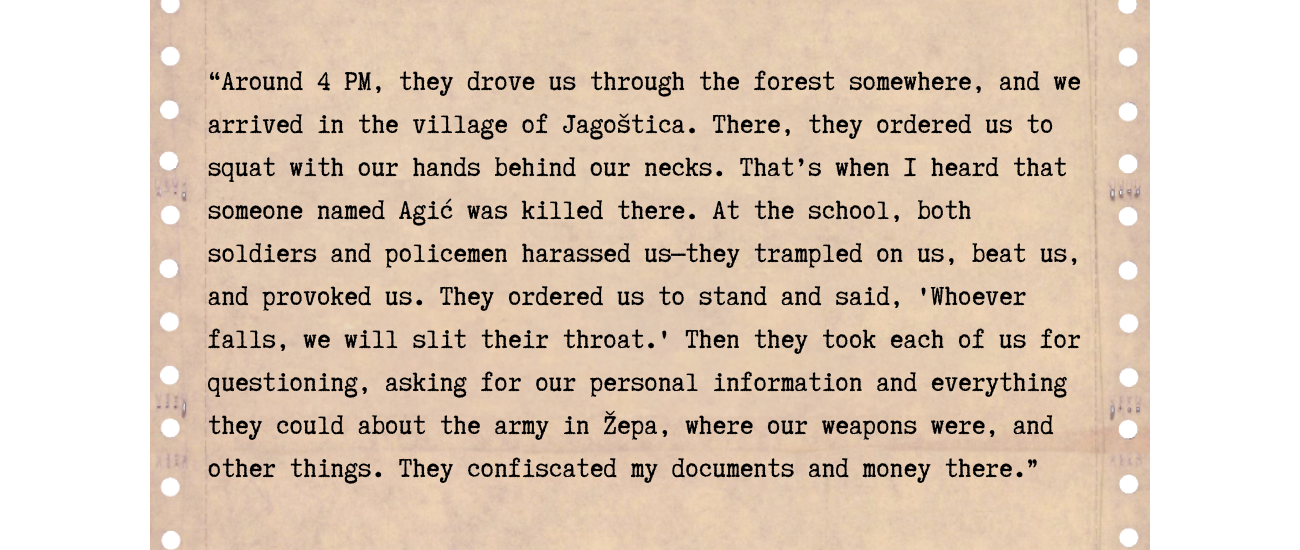
Statement of witness N. O. given to the HLC, July 2007
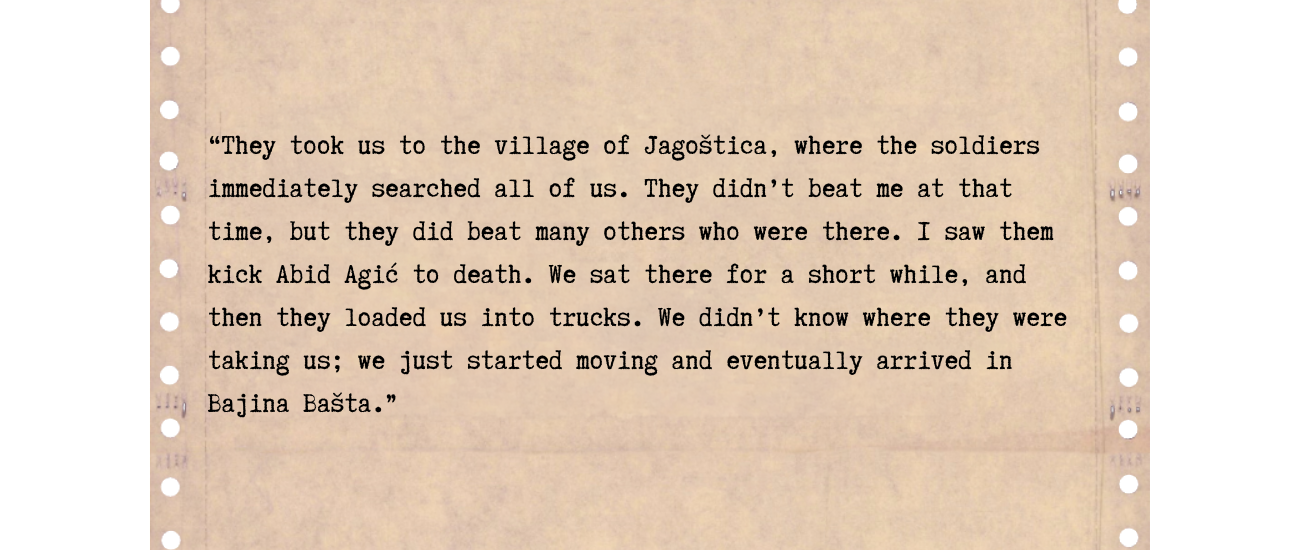
Statement of witness R. G. given to the HLC, August 2007
Torture at Bajina Bašta Police Department
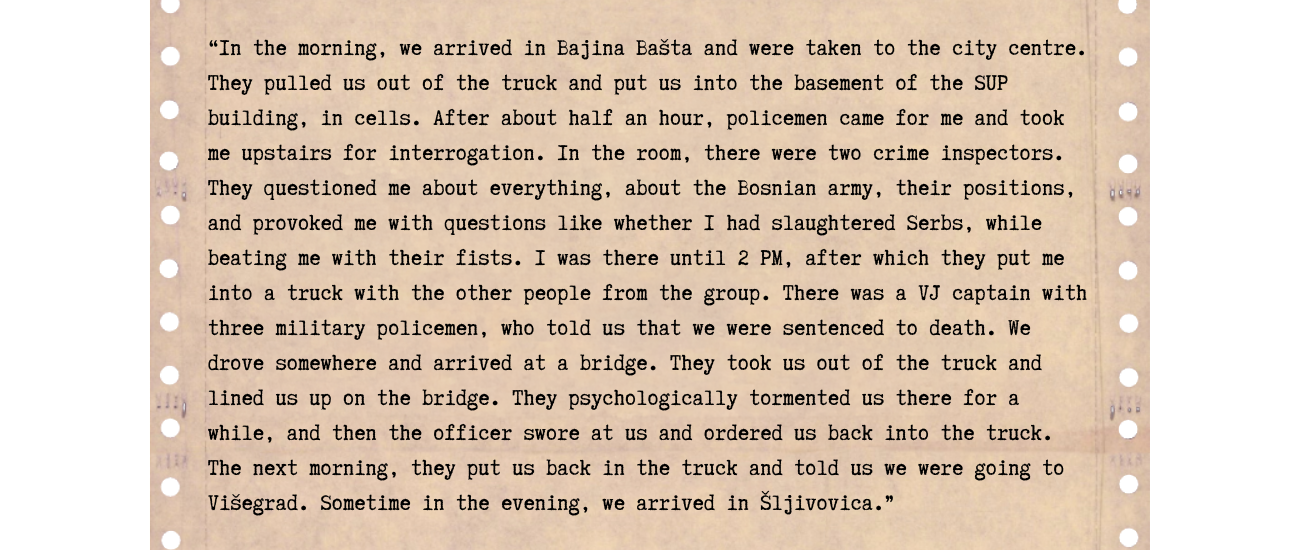
Statement of witness H. B. given to the HLC, June 2007
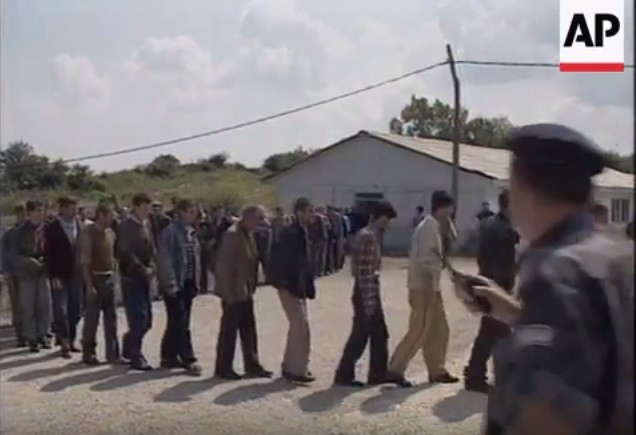
The group of men who crossed to the right bank of the Drina on 4 or 5 August 1995 were at night transported by trucks to the building of the Police Department in Bajina Bašta. The next day, at around 14:00, a captain of the Yugoslav Army accompanied by three policemen ordered the prisoners to get into the truck and then told them that they had been sentenced to death. The truck took them to a bridge where that captain ordered the men to get out and line up. For the next nine hours the prisoners stood lined up, while the soldiers cursed and threatened them. Then they were taken to the VJ 16th Border Battalion Zaovine outpost (municipality of Bajina Bašta), where they spent the night. The soldiers again provoked and swore at them, and the next day loaded them into trucks and told them that they were going to Višegrad. However, they were transported to Šljivovica camp.
Transport to Šljivovica Camp
Both trucks transporting the prisoners held over 50 prisoners each. It was August and the temperature was very high, but the soldiers rolled down the tarpaulin covers and would not allow them to be lifted. The men were suffocating and pleaded to be given water and some air. The soldiers stopped the trucks only once, at Mitrovac on Mount Tara, and allowed the prisoners to drink a little water. During the drive the soldiers threatened their prisoners that they would take them to Višegrad and hand them over to Milan Lukić. On the way to Šljivovica camp, suffocated owing to the lack of oxygen in the overcrowded truck. The mortal remains of Edhem Torlak were exhumed in 2007 and returned to his family.

Statement of witness O. Č. given to the HLC, November 2007
Šljivovica camp
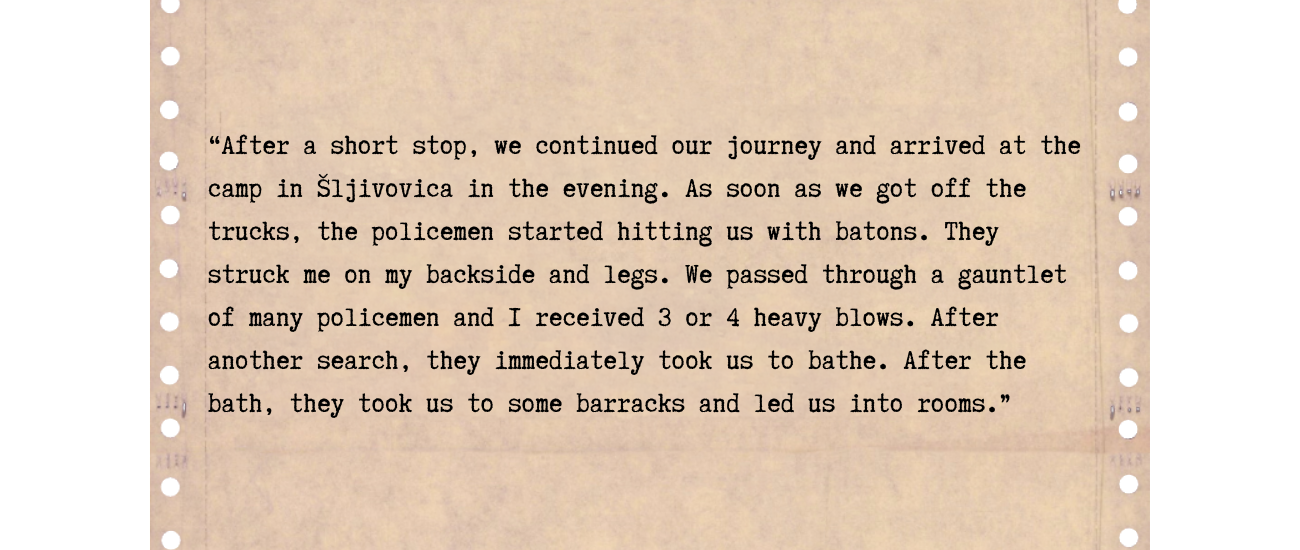
Statement of witness E. A. given to the HLC, August 2007
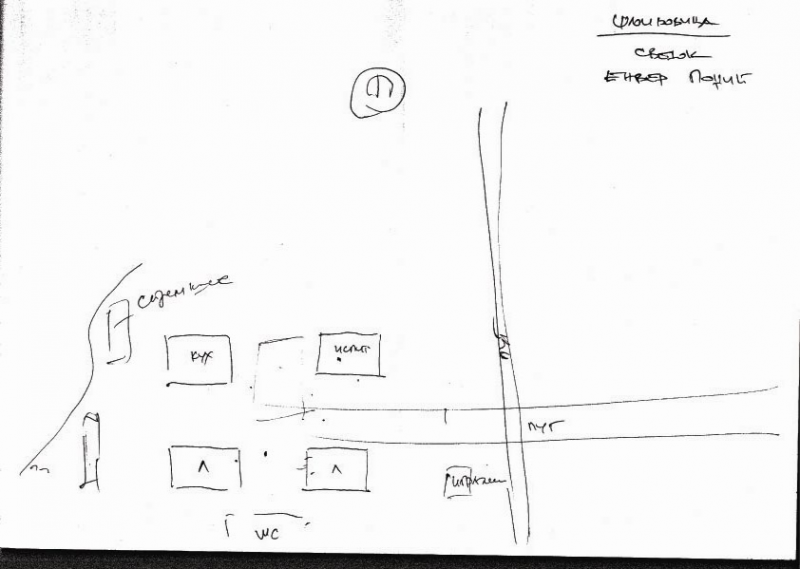
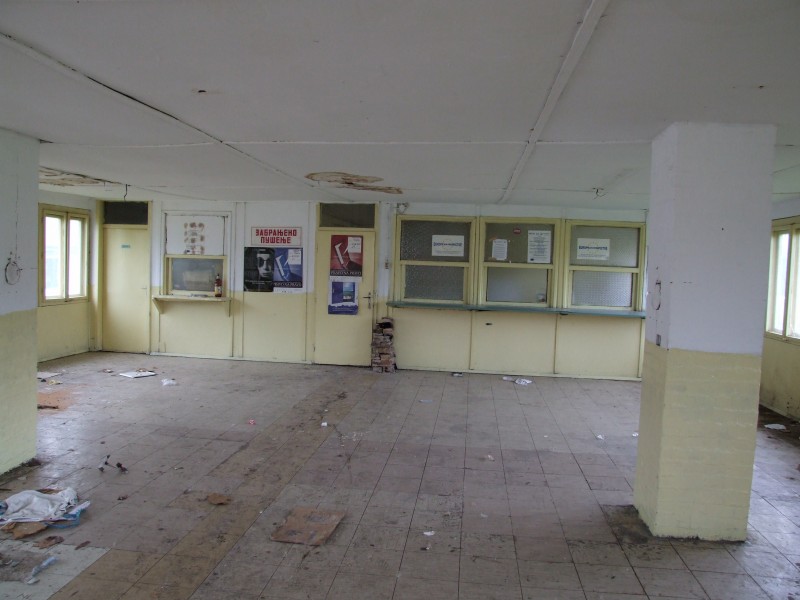
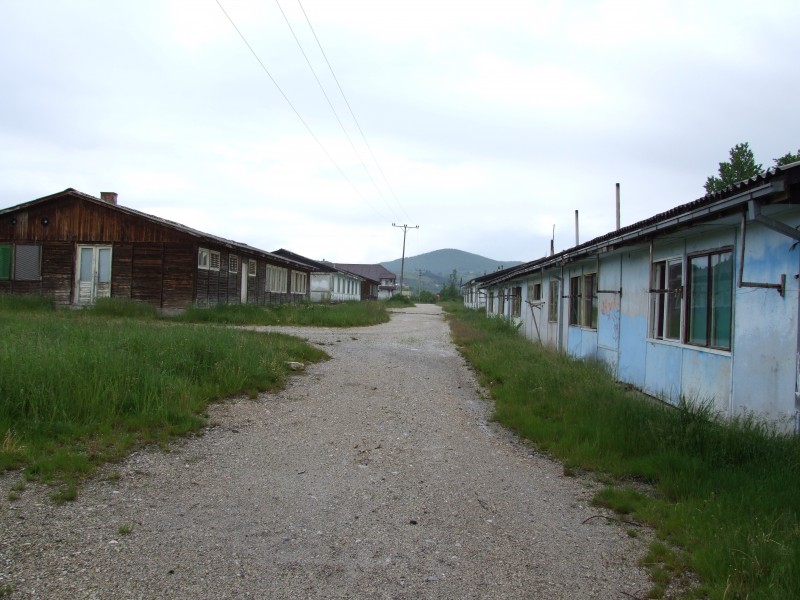
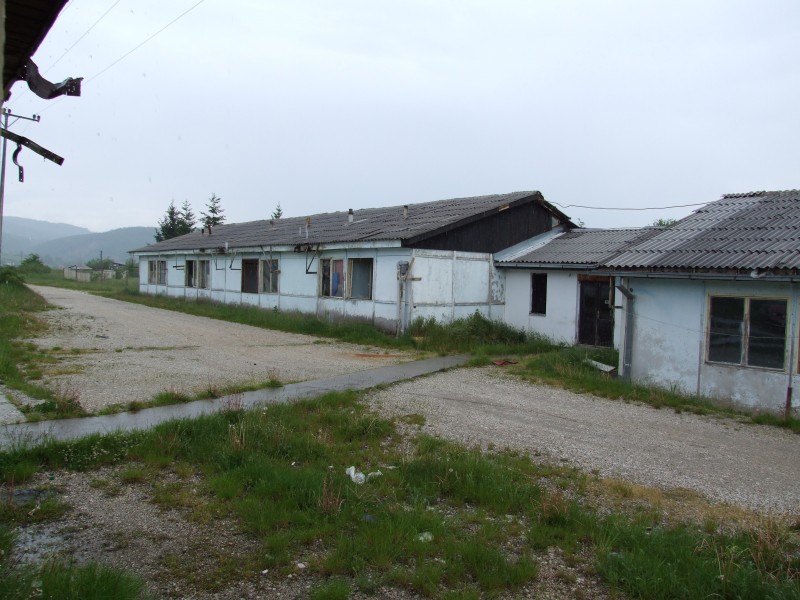
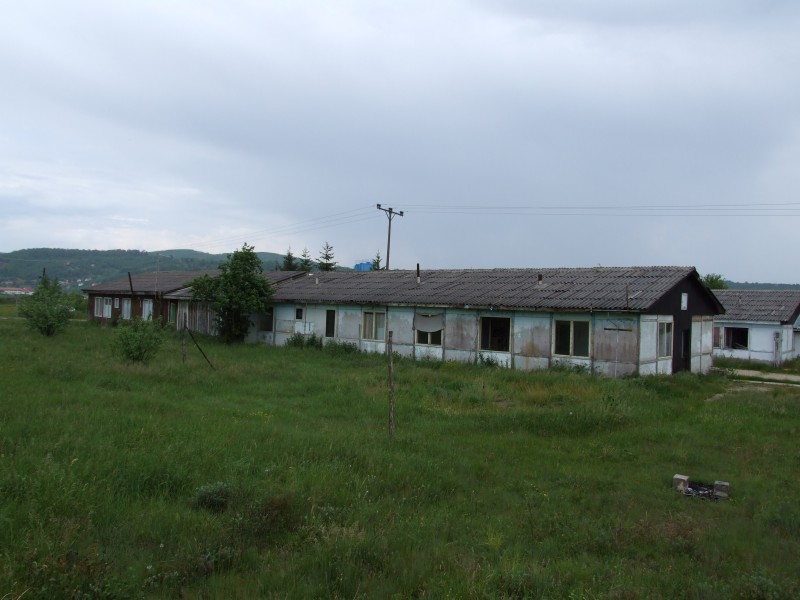
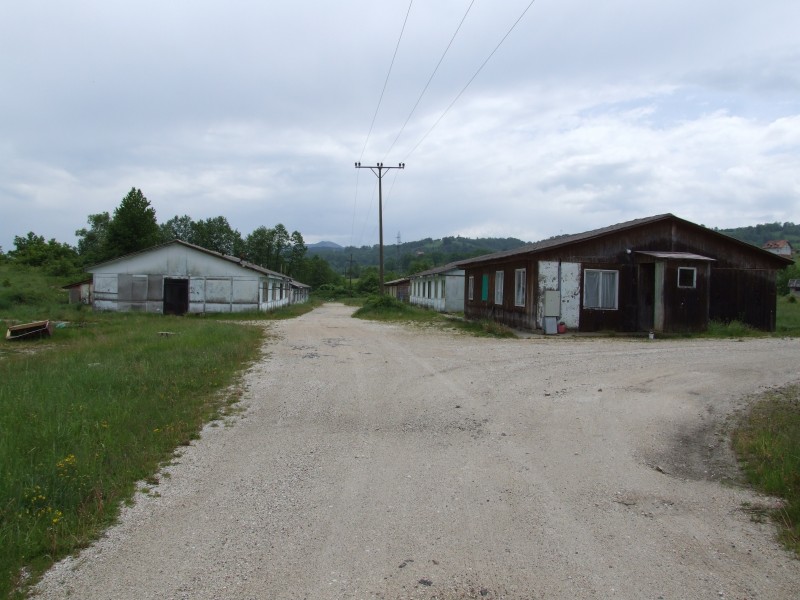
The camp in Šljivovica was set up on the site of the defunct Planum company and comprised several buildings. One of them was used by the camp administration, while others served to house the camp inmates. The inmates, about 350 of them, were under the supervision of police from Užice, Bajina Bašta, Priboj and Prijepolje. Camp security was the responsibility of Zoran Prljević, head of the Police Department at the Užice Secretariat of Internal Affairs (SUP). The inspectors in charge of identification, registration and interrogation of inmates in Šljivovica were Radisav Ojdanić and Radomir Dogandžić, from the same Secretariat.
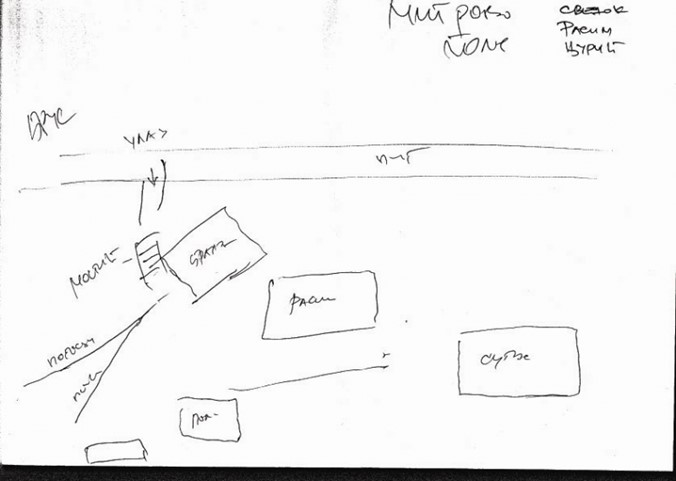
Sketch of the Šljivovica camp
Selection of documents
Living conditions in the camp
Video-svedočenje Senada Jusufspahića
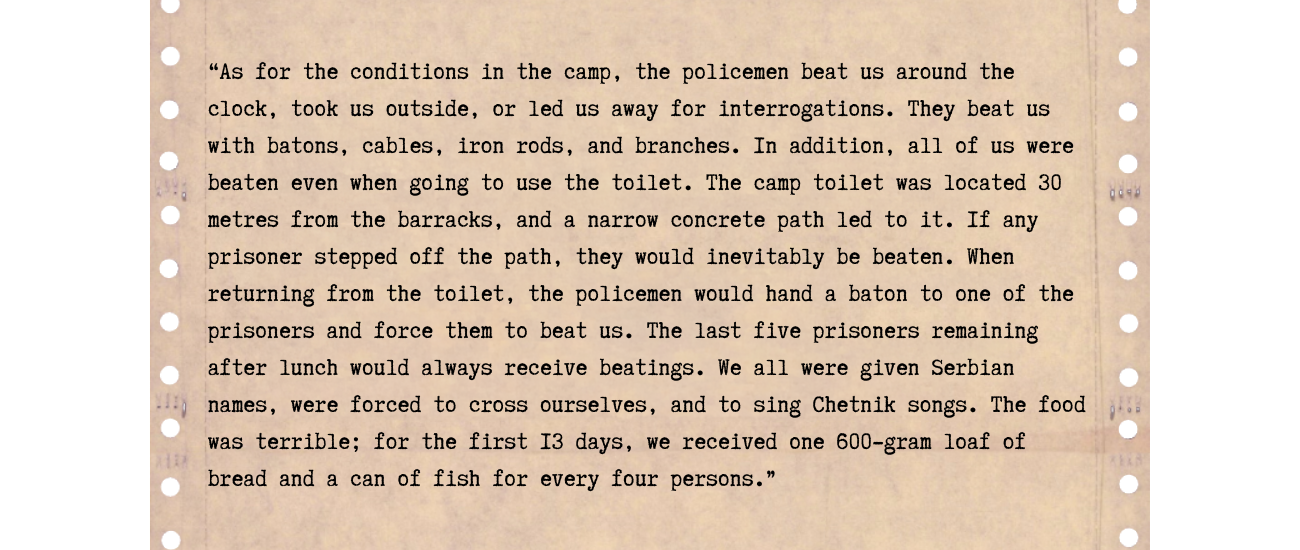
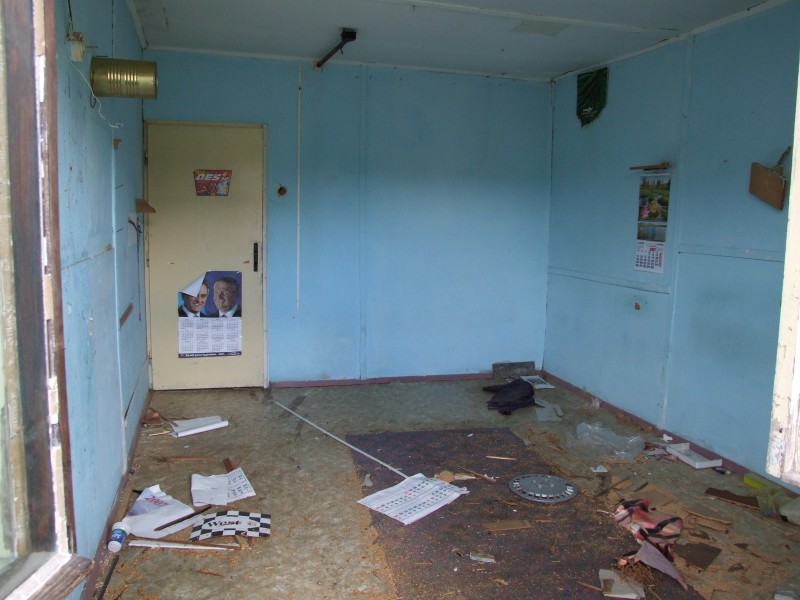
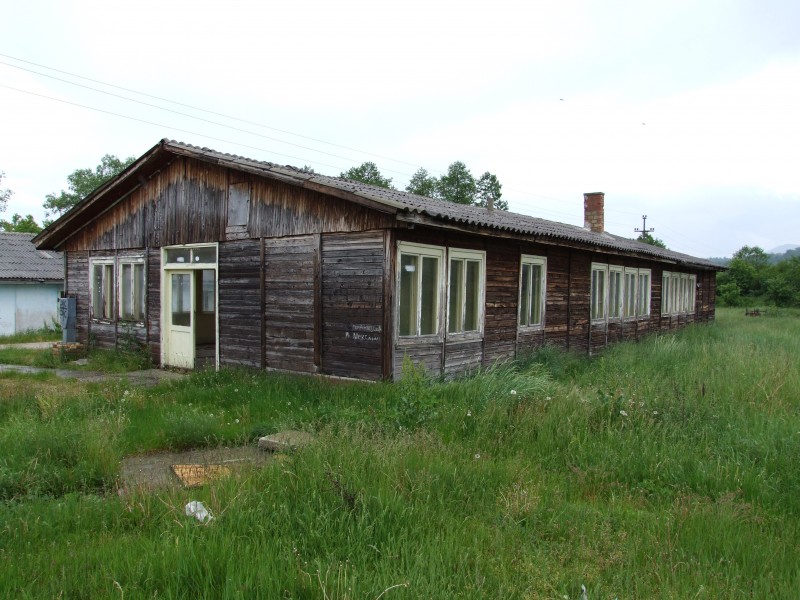
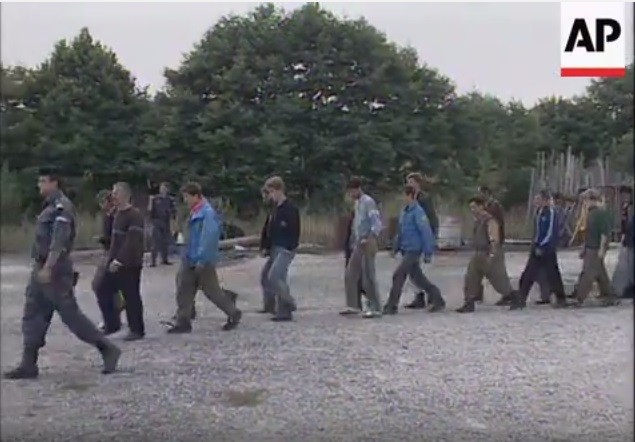
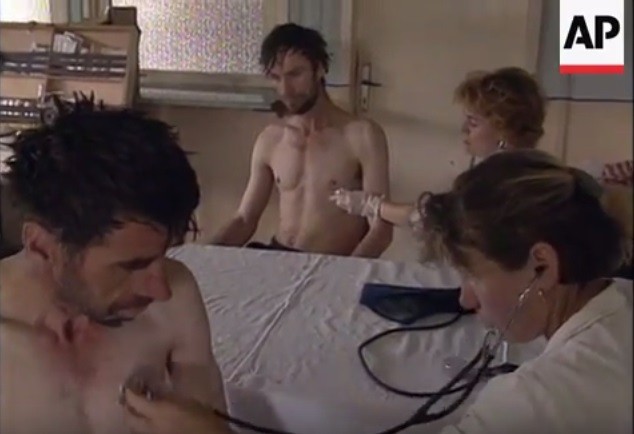
Most of the inmates, about a hundred of them, were housed in the mess-hall of one of the wooden huts. There were no beds to sleep on. The situation was the same for inmates placed in two small rooms; they all slept on concrete. The huts had no toilet facilities and the inmates had to use an outhouse toilet, subject to the permission of the guards. Quite often while going to the toilet they had to respond to the Serbian names the guards had given them. Meals in the camp were irregular and insufficient. There were no hot meals. Frequently, several inmates had to share one tin of sardines. Most of them lost substantial weight during the months they spent in the camp, which elicited sneers from the guards.
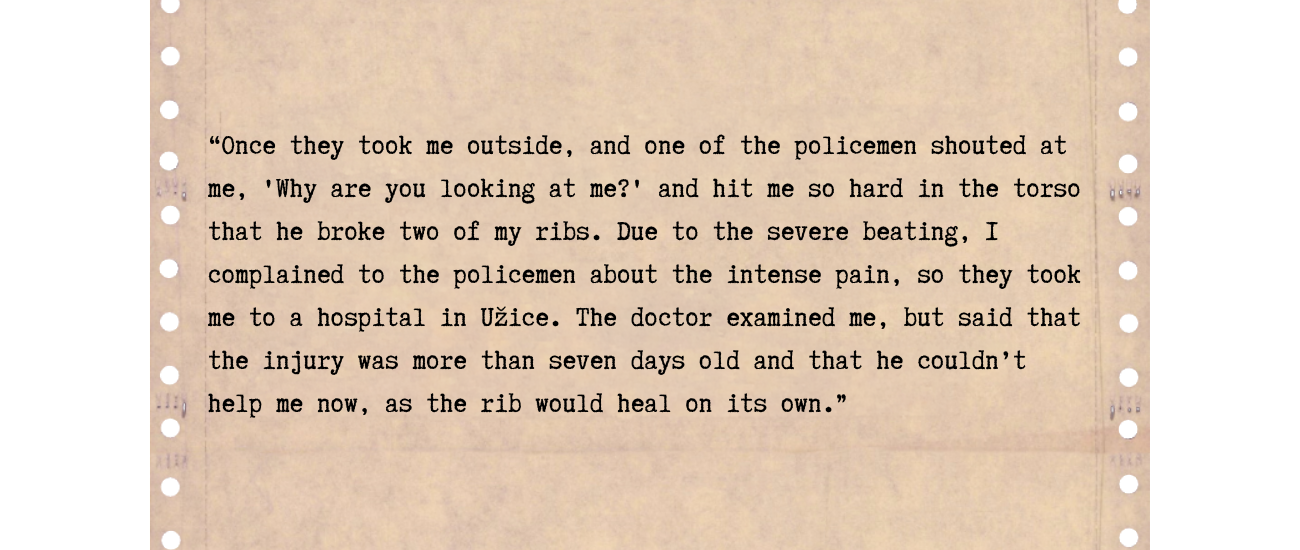
Statement of witness M. O. given to the HLC, November 2007
The inmates were subjected to physical and psychical torture on a daily basis. During interrogation about their participation in the BiH Army, the policemen made them bow their heads whilst they beat them with hands, feet and clubs. Often they made the inmates dip their feet in cold water and then beat them on their soles. They also organized “fights” between inmates, and those who refused to participate were savagely beaten. One inmate who did not know the day of Milan Lukić’s patron saint was beaten till he was black and blue.
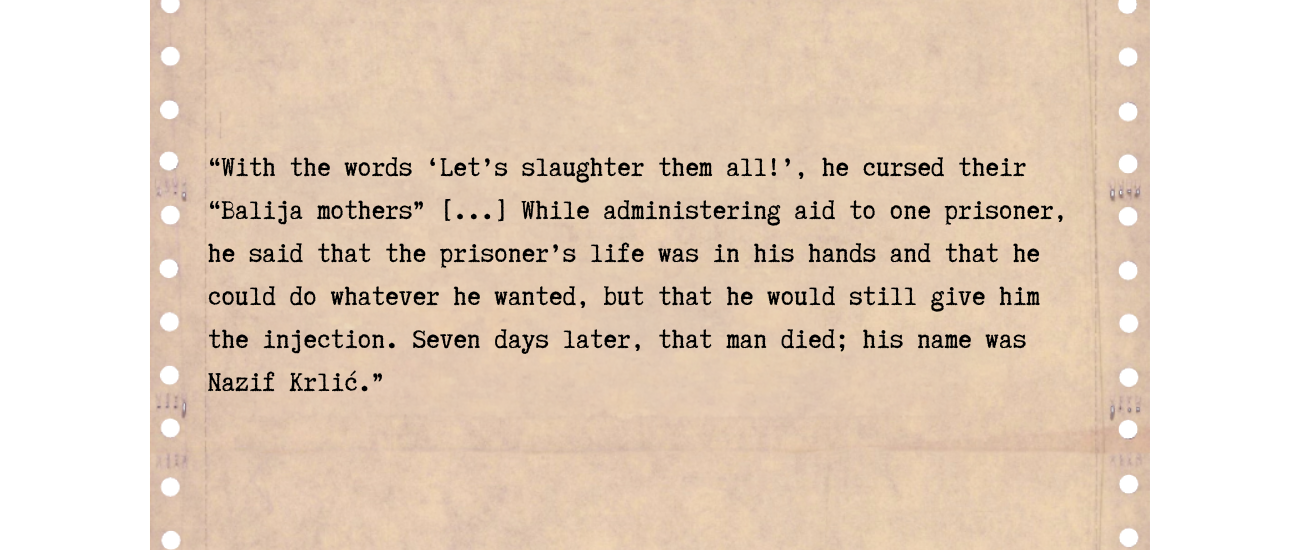
Statement of witness E. B. given before the First Municipal Court in Belgrade, April 2009
According to the inmates, Šljivovica was visited by doctors from the Užice health centre who treated them unprofessionally, used foul language and told them that they should all be killed. The inmates testified that the cruellest of them was a doctor from Užice, who used to say that he could do whatever he wanted with them and that their lives were in his hands. They also testified that this same doctor injected Nazif Krlić, who died on 15 November 1999 in the Užice Health Centre owing to inadequate medical care.
“Isolation”
Particularly difficult was the position of inmates in so-called “isolation” – a separate room in one of the huts. “Isolation” was used for prisoners who the camp administration believed held higher positions in the BiH Army. They were subjected to daily interrogation by the Serbian police, including physical violence. They were also forced to perform heavy physical exercises, and stand in the sun until they fainted, and were used as “toys” by the guards, who sought to intimidate them by pushing rifle barrels into their mouths as a death threat.
Mitrovo Polje Camp
The Mitrovo Polje camp, about 180 km away from the camp in Šljivovica, was on the territory of the Aleksandrovac municipality. It was opened because of the overcrowding in Šljivovica caused by the large number of inmates, and about 450 of them were transported to Mitrovo Polje in buses by the bus operator “Raketa”. The camp was opened on 4 August 1995, and closed six months later, on 8 February 1996. It consisted of two buildings called Rasina and Sutjeska, with a stream running between them. The camp was fenced with barbed wire and guarded by members of the Kruševac Police Department.
Security at the camp in Mitrovo Polje was the responsibility of Radoslav Savić, head of the Kruševac Ministry of the Interior Police Department. The inspectors in charge of the identification, registration and interrogation of inmates in Mitrovo Polje were Vladimir Milićević, Žarko Stepanić and Vladimir Karadžić, all from Kruševac Police Department.
Conditions of stay in Mitrovo Polje camp
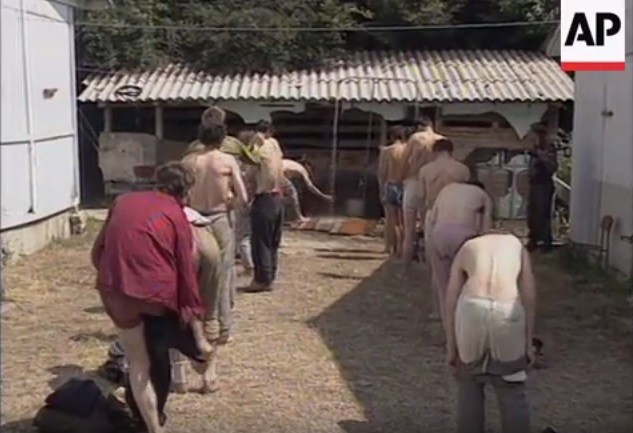
Conditions in Mitrovo Polje were almost the same as in Šljivovica. The inmates slept either in small children’s cots or on the floor, in rooms where the lights were never turned off. There was no water for bathing, and the inmates wore the same clothes for several months and were unshaven and riddled with lice. Mitrovo Polje inmates were subjected to daily beatings and humiliation. They were forced to remain standing in the sun for hours and to sing Serbian nationalist songs. Food in that camp was also irregular and insufficient and most inmates lost weight. Šećan Dizdarević, underage at the time, died in Mitrovo Polje camp owing to complications caused by inadequate diet, beating and lack of medical care.
Selection of documents
“Isolation”
Just as in the Šljivovica camp, there was a separate group of about 7 inmates who were in so-called “isolation”. They were in the Sutjeska building, room 7, and were taken from there by the guards at night to the “court” where they were interrogated and beaten. Interrogation was accompanied by severe beatings, insults and curses. Inspectors mainly questioned them about their engagement in the BiH Army and the disposition of the Bosnian Amy in Žepa.
Sexual violence in the camps
In both Šljivovica and Mitrovo Polje camps, several inmates were subjected to sexual violence. Guards forced the inmates to perform sexual intercourse, touch one another or watch others doing that. One inmate in Mitrovo Polje was raped several times while he was cleaning the toilet. A disabled inmate was abused by the guards with their pushing a water hose into his anus and turning the water on at high pressure from the other end. The camp inmates do not know the names of the Serbian forces members who committed sexual violence in the camps. They were known to them only by their nicknames. The most brutal among them were nicknamed “Ljubovija” and “Koks”.
Visits of international organisations and other bodies to the camps
BiH Federal Commission for Missing Persons
In April 1996 a three-man BiH commission visited the camp in Šljivovica in accordance with obligations anticipated by the Dayton Accords to free all prisoners of war. At that time the camp had just over 279 inmates, bearing in mind that the others had already been resettled in third countries. The Commission found that the camp was surrounded by barbed wire and permanently guarded by armed personnel with trained dogs. They also concluded that the psycho-physical state of the inmates was very poor due to the lack of adequate food, unhygienic conditions and absence of medical care. That is why the Serbian authorities were requested urgently to repatriate the remaining inmates to BiH.

Visits of the International Committee of the Red Cross
The Serbian representatives initially did not allow the International Committee of the Red Cross (ICRC) to enter the camps, register the prisoners or give them POW identity cards. The ICRC entered the Mitrovo Polje and Šljivovica camps on 4 and 18 August 1995 respectively. Having entered the camps, the ICRC made a list of the inmates, and then food, beds and hygiene kits started to arrive. However, this aid was not distributed to the inmates but rather was driven away in an unknown direction by the camp administration.
Court proceedings related to Šljivovica and Mitrovo Polje camps
Torture suffered by the men who escaped from Žepa to Serbian territory has not been part of indictments in any of the cases conducted before the International Criminal Tribunal for the Former Yugoslavia (ICTY). Furthermore, the goings-on in the Serbian camps of Šljivovica and Mitrovo Polje during 1995 and 1996, have never been referred to by the ICTY judgement in the Case of Bosnia and Herzegovina vs. Yugoslavia concerning the genocide on the territory of BiH.
Criminal Complaint to the Office of the War Crimes Prosecutor
In 2011 the Humanitarian Law Center (HLC) filed a criminal complaint to the Office of the War Crimes Prosecutor (OWCP) against several dozens of VJ and MUP members for crimes committed in Šljivovica and Mitrovo Polje camps from late July 1996 until April 1996. The HLC accompanied the criminal complaint with statements given by about 70 camp inmates to HLC researchers, testifying to the conditions of their stay and the torture they suffered in these two camps.
After two years, in March 2013 the OWCP dismissed the criminal complaint, on the grounds that that no crime in these camps that could be tried before a court in Serbia had been committed.
Through investigations subsequently conducted, the HLC established that the OWCP had failed to contact a single one of the former inmates to verify the allegations of the committed crimes reported by the HLC. Therefore, the HLC lodged a constitutional appeal in the belief that the OWCP had failed to carry out a comprehensive, independent and efficient investigation. The appeal was dismissed by the Constitutional Court in 2014 for procedural reasons.

Proceedings before the European Court of Human Rights
Following the decision of the Serbian Constitutional Court the HLC, acting on behalf of the inmates, lodged a remonstrance with the European Court of Human Rights (ECHR) in Strasbourg for violation of rights listed in the European Convention: Article 3, the right to life, Article 6, the right to a fair trial and Article 13, the right to an effective legal remedy.
The ECHR rejected this remonstration in October 2016, considering that the inmates were too late with their demands for the protection of their rights as established by the Convention. They concluded that the applicants had failed to institute proceedings for the infringement of their rights in a timely manner, bearing in mind the passage of 16 years between the events concerned and the lodging of the criminal complaint. The ECHR pointed out that the applicants could have appealed in the period 2006–2010, but since they did so in late 2014, their complaint was dismissed.
With this view, the ECHR transferred to the appellants the burden of proof that the state body had failed to execute its competencies.
Reparation proceedings
During 2007 and 2008 the HLC, acting on behalf of 19 inmates, initiated a total of five proceedings for reparation against the Serbian Ministry of the Interior, with a view to obligating Serbia to indemnify the inmates for sustained fear and psychical pain, as well as for the impairment of their overall living activities during their stay in the camps. Regrettably, none of the proceedings had a successful ending, since the Serbian courts failed to award damages to any of the inmates.
The key witnesses in these procedures were the MUP members who actually carried out the torture in the camps, and the courts generally accepted their statements. Furthermore, the courts avoided referring to the facilities in Šljivovica and Mitrovo Polje as “camps”, exclusively using the term “reception centres” instead.
Memorialisation
The camps which existed on the territory of Serbia, including the ones in Šljivovica and Mitrovo Polje, do not feature in Serbian memory culture. The locations of Šljivovica and Mitrovo Polje camps are not marked as places where 20 years ago Žepa Bosniaks were imprisoned, abused and tortured. There is no monument, plaque or anything else which speaks of their sufferings in these places on the territory of the Republic of Serbia. The site of the former camp in Šljivovica is neglected and overgrown by weeds, with only the ruins of wooden huts once housing the inmates.
In early August every year, former inmates visit the location of the former camp in Šljivovica and lay flowers in memory of the torture inflicted on the men from Žepa. None of these camps has ever been visited by a single representative of the Serbian authorities, nor has the ceremony of the laying of wreaths ever been attended by these authorities.
Stupčanica 95 Order
Report of the VRS Main Staff of 31 July 1995
Official Memorandum of the Military Security Agency
Report of the State Commission of BiH for Tracing Missing Persons
List of Men Who Fled from Žepa
Notification of the War Crimes Prosecutor’s Office
JUDICIAL PROCEEDINGS
REPARATION PROCEEDINGS
In 2007 and 2008, the HLC initiated a total of five compensation proceedings on behalf of 19 camp detainees against the Serbian Ministry of Interior, seeking to oblige Serbia to pay compensation to the detainees for the fear suffered, mental anguish caused by violations of personal rights, and reduced general life activity during their detention in the camps. None of these five proceedings ended successfully; that is, the courts in Serbia did not award compensation to any of the camp detainees.
One of the characteristics of these proceedings was that police officers who had carried out torture in the camps were heard as witnesses, and the court generally accepted their testimony as credible. In addition, during the proceedings, the court avoided referring to the facilities in Šljivovica and Mitrovo Polje as camps, calling them exclusively “reception centres”. Similarly, in one proceeding, the court attributed the psychological condition in which the camp detainees find themselves today to the wartime environment, which it described as “the consequence of a series of life events”, rather than to the torture they had survived during their detention in the camp.